

5 Women scientists in the low status, high impact collective
Celebrating 12 unacknowledged, unbelieved, and driven to obscurity Women Scientists over 3 articles leading up to the International Day of Women and Girls in Science on Feb 11th this year.

Women scientists face a rough deal.
Not surprising perhaps in earlier centuries, but I bet this is still going on and much more so than gets out in the public eye.
If only because nowadays doing it openly is politically incorrect. No one — including scientists, scientific institutions, and universities — wants a reputation for politically incorrectness. And scientists tend to be smart enough to come up with “plausible” reasons that at least sound politically correct.
Science regards any findings that go against “common” knowledge with skepticism, whether of female or male origin. But what happened to the 12 women in this article series goes way beyond that.
I’ve grouped them in three “societies”:
The “they used my data” club: 4 Women scientists who had their work appropriated and taken credit for by men.
The “ignored until I proved it twice” brigade: 3 Women scientists who faced incredulity about their findings, often having to prove it more than once, or have a man corroborate (repeat) their findings before being accepted.
The “low status, high impact” collective: 5 Women scientists who had to take positions at lower status institutes to be able to pursue their interests.
Note that many many women in the brigade and the collective are also members of the “they used my data” club.
This week’s society is the “low status, high impact” collective. Last week’s was the “ignored until I proved it twice” brigade. And the week before that it was the “they used my data” club’s turn.
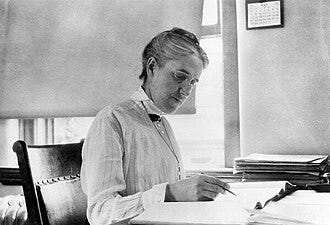
8. Henrietta Leavitt, Astronomer
In 1893, Henrietta Leavitt was hired as a “computer” at Harvard Observatory—a job reserved for women, involving tedious data analysis for low pay.
Male astronomers made discoveries; women did calculations.
Henrietta Leavitt was assigned to study variable stars—stars that brighten and dim at regular intervals. Over years of painstaking work, examining thousands of photographic plates, she identified over 2,400 variable stars.
Then she noticed something the male astronomers had missed: a relationship between a star’s period and its luminosity. This meant these stars could be used as “standard candles” to measure cosmic distances.
Her discovery changed astronomy.
It allowed scientists to determine the size of the Milky Way, measure distances to other galaxies, and understand the structure and scale of the universe.
Edwin Hubble used her work to show the universe was expanding.
Henrietta Leavitt died of cancer in 1921 at age 53, still a “computer.”
Hubble got famous. She got a crater on the moon.
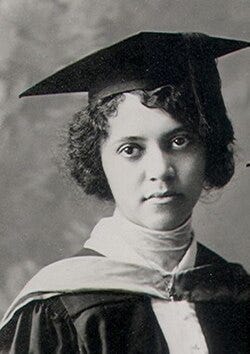
9. Alice Ball, Chemist
In 1915, Alice Ball became the first Black woman to earn a master’s degree from the University of Hawaii.
She was 23. A year later, she developed a breakthrough: an injectable treatment for leprosy using oil from the chaulmoogra tree.
Previous treatments didn’t work because the oil couldn’t be absorbed by the body.
Alice Ball figured out how to isolate the active compounds and make them water-soluble. It was revolutionary—the first effective treatment for a disease that had plagued humanity for centuries.
Then she died suddenly in 1916 at age 24, possibly from a lab accident.
The university president, Arthur Dean, took her research, made slight modifications, and published it as the “Dean Method.”
For decades, it was the standard treatment for leprosy—saving thousands of lives—and Alice Ball’s name was forgotten.
It wasn’t until the 1970s that a historian uncovered the truth. Now the University of Hawaii awards the “Alice Ball Scholarship” in her name.
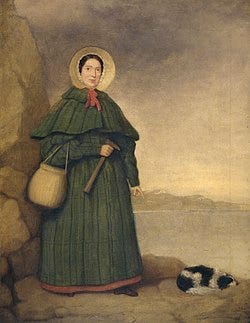
10. Mary Anning, Paleontologist
In 1811, at age 12, Mary Anning discovered the first complete ichthyosaur skeleton on the cliffs of Lyme Regis, England.
She was from a poor family; fossil hunting was how they survived. Over her lifetime, she discovered the first plesiosaur, the first British pterosaur, and countless other specimens that revolutionized understanding of prehistoric life and extinction.
Scientists from across Europe traveled to Lyme Regis to buy her finds.
They published papers describing “her” fossils—without crediting her.
The Geological Society of London excluded women; she couldn’t join, couldn’t present, couldn’t publish under her own name.
She learned French to read scientific papers, taught herself anatomy to understand what she was finding. When male scientists visited, she corrected their interpretations—they rarely acknowledged it in print.
She died in 1847 at 47. One scientist wrote: “She contributed more to the science of geology than almost anyone.” Her reply, had she lived to hear it would probably have been something like: “I know.”
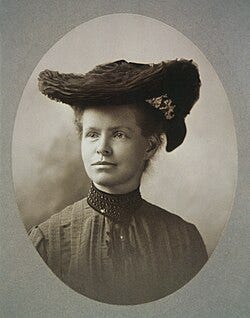
11. Nettie Stevens, Geneticist
In 1905, Nettie Stevens discovered that sex is determined by chromosomes—specifically the X and Y.
She was working with mealworms, using a microscope to study their chromosomes, when she observed that males had an XY combination and females had XX.
It was a fundamental discovery about heredity and sex determination.
Her paper was published—second author, after her male colleague Edmund Wilson, who had made similar observations in insects around the same time but without the same clarity.
Thomas Hunt Morgan, a prominent geneticist, took particular interest.
He wrote textbooks. He wanted to magnify his contributions. Stevens’ name gradually disappeared from the narrative of sex determination’s discovery.
When she died of breast cancer in 1912 at 51, Morgan wrote that she “didn’t have a broad view of science.” His letters to her, discovered later, told a different story: he was constantly asking her for experimental details. She was answering.
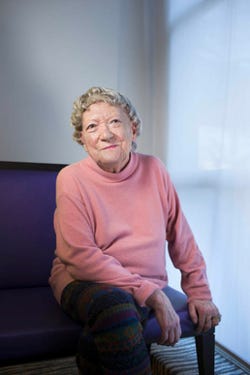
12. Marthe Gautier, Physician, Geneticist
In 1958, Marthe Gautier discovered that children with Down syndrome had an extra chromosome.
She was examining cells under her microscope, carefully documenting what she saw.
But her microscope wasn’t powerful enough to identify which specific chromosome was duplicated. She needed help. She “naively”—her word—lent her slides to geneticist Jerome Lejeune.
Six months later, Lejeune published the discovery of trisomy 21.
His name was first. Hers was second—misspelled.
He presented the findings at conferences. He became famous. He received awards, honorary degrees, and was proposed for the Nobel Prize.
Gautier watched from the margins. It wasn’t until 2014, when she was 88, that she publicly stated Lejeune had taken credit for her discovery.
That same year, an ethics committee at France’s medical research institute concluded Lejeune was unlikely to have played the “dominant” role in the finding.
Gautier died in 2022 at 96, still fighting to set the record straight.

Sources
Henrietta Leavitt: A Mighty Girl (2025), JSTOR Daily (2025)
Alice Ball: TED Ideas (2024), White House Archives (n.d.)
Mary Anning: BBC Science Focus (2025), A Mighty Girl (2025)
Nettie Stevens: National Geographic (2021)
Marthe Gautier: Physics.org (2022), AFP (2022)