

3 Women scientists in the “ignored until I proved it twice” brigade
Celebrating 12 unacknowledged, unbelieved, and driven to obscurity Women Scientists over 3 articles leading up to the International Day of Women and Girls in Science on Feb 11th this year.

Women scientists face a rough deal.
Not surprising perhaps in earlier centuries, but I bet this is still going on and much more so than gets out in the public eye.
If only because nowadays doing it openly is politically incorrect. No one — including scientists, scientific institutions, and universities — wants a reputation for politically incorrectness. And scientists tend to be smart enough to come up with “plausible” reasons that at least sound politically correct.
Science regards any findings that go against “common” knowledge with skepticism, whether of female or male origin. But what happened to the 12 women in this article series goes way beyond that.
I’ve grouped them in three “societies”:
The “they used my data” club: 4 Women scientists who had their work appropriated and taken credit for by men.
The “ignored until I proved it twice” brigade: 3 Women scientists who faced incredulity about their findings, often having to prove it more than once, or have a man corroborate (repeat) their findings before being accepted.
The “low status, high impact” collective: 5 Women scientists who had to take positions at lower status institutes to be able to pursue their interests.
Note that many many women in the brigade and the collective are also members of the “they used my data” club.
This week’s society is the “ignored until I proved it twice” brigade. Last week’s was the “they used my data” club. Next week it’s the “low status, high impact” collective’s turn.
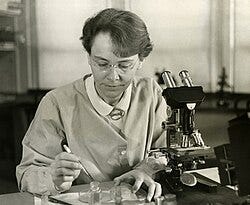
5. Barbara McClintock, Geneticist
In 1948, Barbara McClintock published her discovery: genes in corn could change positions on chromosomes.
She called them “jumping genes.”
The scientific community’s response was hostile, dismissive. Genes didn’t move—everyone knew that.
For years, she presented her findings at conferences to rooms of skeptical, often openly hostile male scientists. She stopped trying to convince them. She kept experimenting, kept documenting, kept publishing in obscure journals.
She worked in relative isolation for decades. By the 1970s, molecular biology had advanced enough that other scientists “discovered” transposable elements—and realized Barbara McClintock had been right all along.
In 1983, at age 81, she won the Nobel Prize in Physiology or Medicine. The award committee noted her work was “initially met with puzzlement, even hostility.”
Barbara McClintock’s had already moved on to her next research question.
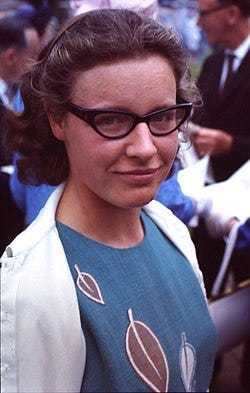
6. Jocelyn Bell Burnell, Radio Astronomer
In 1967, Jocelyn Bell Burnell was a graduate student who’d spent two years hammering posts into muddy ground, soldering copper wire, building a radio telescope that covered 57 tennis courts.
She was the first to operate it, analyzing 96 feet of chart paper every night.
One night, she noticed a “scruff” in the data—a signal occupying 5 millimeters in 500 meters of paper.
Her supervisor suggested it was interference.
She insisted it wasn’t. She tracked it, documented it, found three more.
She’d discovered pulsars—collapsed stars emitting regular radio pulses.
In 1974, her supervisor Antony Hewish won the Nobel Prize for the discovery, shared with Martin Ryle. Jocelyn Bell Burnell wasn’t included.
Astronomer Fred Hoyle protested. She didn’t. She said students don’t win Nobels, moved to X-ray astronomy, and kept working.
In 2018, she won the $3 million Breakthrough Prize—and donated every penny to fund scholarships for women, minorities, and refugees in physics.
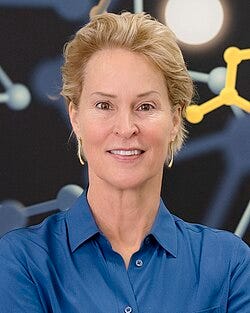
7. Frances Arnold, Chemical Engineer
Frances Arnold doesn’t waste time proving herself to detractors.
As a graduate student at UC Berkeley in the 1980s, when male colleagues wanted to convert the women’s restroom into a clean room, she and her advisor proposed it to the dean—turning discrimination into leverage.
She pioneered “directed evolution”—using the principles of natural selection to engineer better enzymes.
It was controversial.
Many scientists thought protein engineering should be done through rational design, not evolution.
Frances Arnold let her results speak. Her enzymes worked.
By the 1990s, her directed evolution methods were revolutionizing biotechnology, creating enzymes for everything from biofuels to pharmaceuticals.
In 2020, she retracted a paper after discovering errors. No excuses, no deflection—public accountability.
When asked about criticism throughout her career, she said: “Luckily, I’m pretty good at letting criticism go in this ear and exit the other one.”
In 2018, she won the Nobel Prize in Chemistry. She was 62.

Sources
Barbara McClintock: A Mighty Girl (2025), National Geographic (2021)
Jocelyn Bell Burnell: Wikipedia (2025), Cambridge University (n.d.), Physics World (2020), Smithsonian Magazine (2018)
Frances Arnold: CalTech (n.d.), Chemical & Engineering News (2025)
Fabulous to give some publicity to the achievements of women. They have been overlooked for so long.