

What pleasing Nina (my dog) surprisingly unlocked for me
How giving in to your dog can bring you unexpected treasure
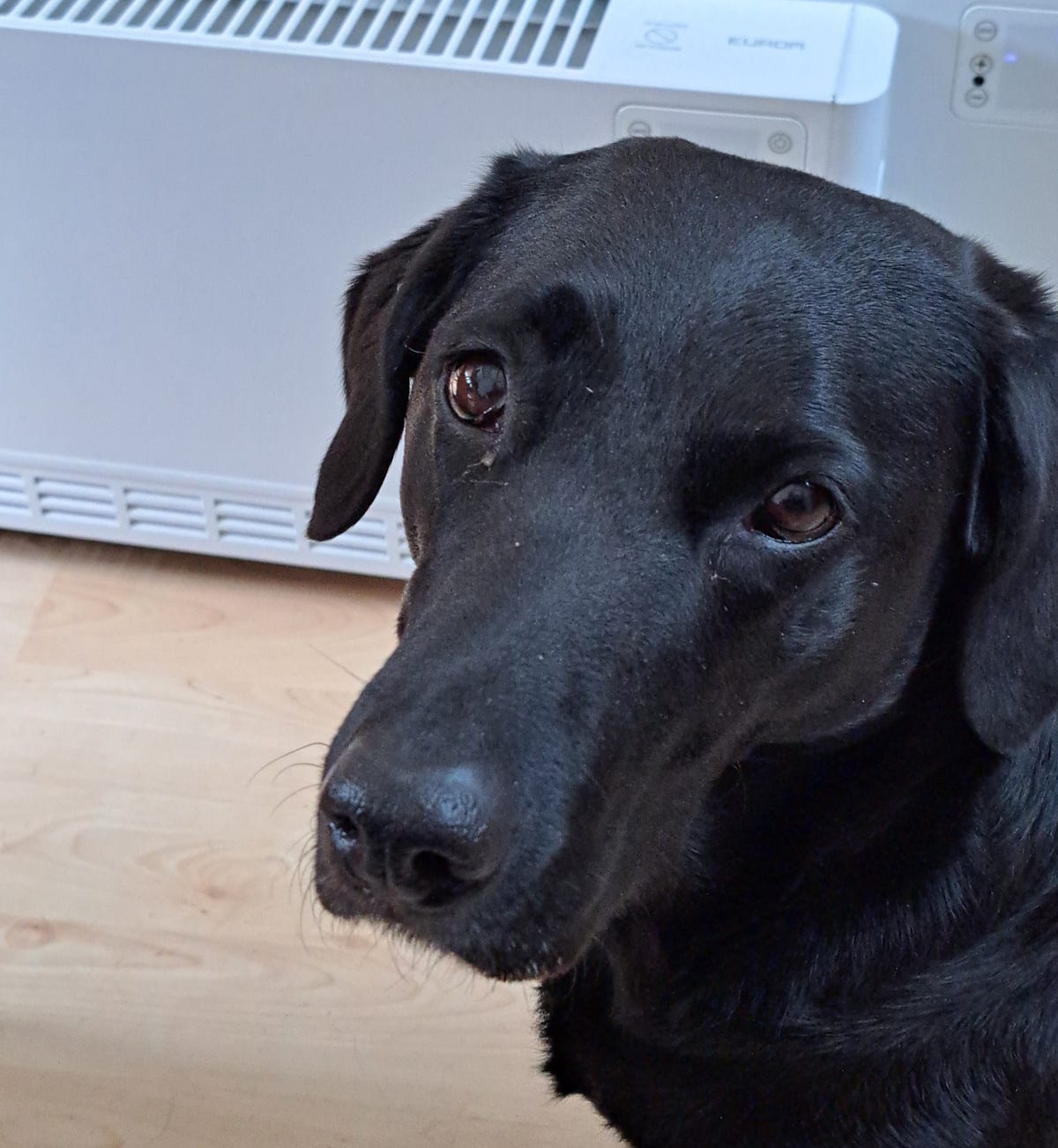
All my life, I’ve had a hard time sticking with any habit.
Not because I don’t care.
Not because I don’t know how to build a habit (I’ve read The Power of Habit, Tiny Habits, Atomic Habits, and tens of eBooks on habit building).
Not because I don’t see the value of habits or what the habit would bring me.
And I’m not going to blame my neurodivergence for it, although it is a huge factor.
Tedium and repetition collude against me
Anything that has the teensiest of tedium or induces boredom purely from the repetition that’s inherent in a habit, stands little chance against my ADHD-er’s and gifted-er’s propensity to bore easily and lose interest faster than a race car.
My autist likes repetition, structure, and predictability, but is vetoed by the other two.
Any habit I start usually lasts three days, weeks, or months. Then I’m done.
Not the most effective trait to have when you want to build something that’s going to take several months just to gain some traction.
Add SOS (Shiny Object Syndrome), FOMO (Fear Of Missing Out) around the “best” way forward, and crickets (little if any feedback on what you’re publishing, or all from the same two people) into the mix and you have a perfect recipe for shooting yourself in the foot on a regular basis.
Boringly regular to be precise.
Maybe the solution is in avoiding the boring regularity of changing my mind.
Never considered that before (actually just thought of it right now writing that previous paragraph). But no. That ain’t gonna work. Boring + boring does not interesting make. It mostly inspires exasperation with myself.
And yet, I’m a creature of habit
Ironically, I also stick with activities long past their sell-by-date. Often continuing for up to two years after I start to lose interest.
Out of sheer habit. Now, if that isn’t ironic, I don’t know what is.
So, I can stick with stuff. I can do this habit thing.
Which made me wonder. What was the difference between the things I did and didn’t stick with?
Obviously, tedium. But not repetition in and of itself. Repetition without tedium isn’t half as bad.
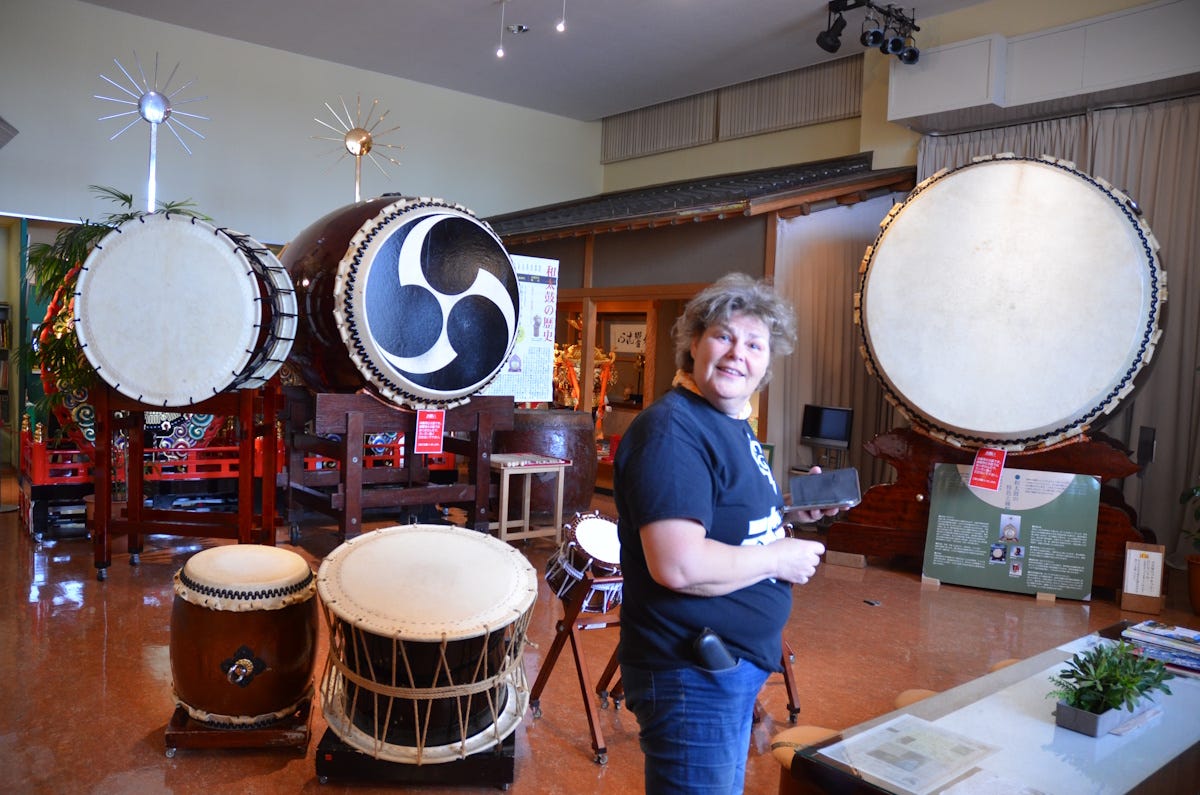
When, the type of activity is repeated, but what I’d do during the activity was different almost every time, I’d be fine. Like Taiko practice for 12+ years.
And not all tedium is born equal.
Some tedium gets me into a meditative state (running, which I’d still be doing if I wouldn’t injure myself all the time tripping over a blade of grass), or changes the object I’m working on before my eyes and that’s a wonderous process to watch (like sanding wood).
If repetition isn’t the problem and tedium can become meditative, what else is keeping me from sticking with what (I’ve said) I want to do?
Like losing weight.
I know I want to and not just because of the health benefits. I like the idea of having a lean body, losing the jowls, enjoying seeing all of myself in the mirror not just my face. Still, sticking to an eating plan (if I even have one) usually lasts for 3 weeks. But... I also _have_ lost 25+ kilos and 10+ kilos on numerous occasions.
What’s the difference between them, then?

Decisions eat desires for breakfast
Deciding what you want is essential.
The times I stopped after 3 weeks (or 4 or 6, the exact number isn’t the point), I started with a desire more than a decision. I don’t knock desire, it’s great fuel.
But it’s also fickle and tends to get snowed under by other desires. Like desiring the taste and mouth-feeling of a delicious snack. Chocolate, fudge, anything sugary, smooth, and creamy.
Decisions cut off all other options.1

You need a strategy, tactics, and OODA loops
Without a strategy I’d be all over the place, chasing every “that sounds good” idea that serendipitously crossed my path.
I’d be looking for shortcuts because the result was what mattered.
Like I have done in my business.
The long term plan is very clear to me. The strategy to get there as well.
The tactics are more flexible, but I’ve learned, the hard way, that you need to give tactics a reasonable time to show results.
And I used OODA loops before I knew the abbreviation (Observe, Orient, Decide, Act).
What got in the way every time, however, was the short-term: the perceived need for “now-revenue”. Chasing that result to the point of neglecting my long-term goals.

When life gets in the way, habits fly away
Now here’s something that fundamentally changed how I approach any change in everything I do: contingency planning. Which is a fancy term for thinking in advance of what I’m going to do when life inevitably gets in the way.
For me that’s predictably unpredictably often. Meaning I know (predictable) migraines will hit, but not when (unpredictability). One thing is sure though: they crop up at the least convenient of times.
Without contingency planning, my streaks are interrupted.
When the interruption lasts for longer than a day or two, it gets harder to restart. Ten times more so without a decision supporting steeling your resolve.
With contingency planning, you decide (!) -- in advance -- what you’re going to do when the rug gets janked out from under you or you’re simply too tired from whatever to even contemplate spending energy on your (new) habit.
When a really bad migraine hits, cognitive capability flies out of the window and walking gets torturous, every step reverberating throughout my skull. Don’t even suggest running, though I have done it and sometimes it helped clear the migraine (sometimes being the operative word).
So I now plan for contingencies like that. Some examples:
If my plan said “run 30 minutes” the contingency plan could be “walk 10 minutes”.
If my plan said “do 50 kettlebell swings every day”, the contingency plan could be “do 5”.
If my plan said “write for an hour every day”, the contingency plan could be “write three sentences”.
The point is that you do something, the tiniest execution possible given the circumstances, so you can celebrate and reinforce the habit.
To go anywhere, do anything, you need to start
Quite often getting going, starting an activity is the biggest hurdle to get over. Getting up from the couch is the biggest mountain to climb to keep any habit going. Unless you can do it on your couch, of course, but that’s beside the point.
Once you’re in motion everything becomes easier, the momentum carries you forward.
When I was running and doing 2 and 3 hour training sessions, I’d often dread the idea of spending that amount of time before going out.
So, I’d give myself permission to head home earlier if that’s what I needed to do (made a lot easier because my route was always some kind of circuit around my house).
I never (really, never) did.
Closing in on a point where I cut my training short, I’d think “Come on, just a bit longer and then you can stop if you want”. Reaching it, I’d think: “Oh, no, come on, we’ll turn in at the next point” (we being myself and Sofie - my four-legged running mate at the time). And at the next opportunity to return early, the same scenario unfolded.

The one thing that precedes starting
To do anything consistently, you need to show up. Physically. To a location where you can do it.
To the gym, to an office, to a co-working space, to the kitchen (if preparing a healthy meal is the habit you’re after).
And that is where Nina comes in.
Working on her anxiety around being without me (unless she chooses to) I started giving her a small chew stick or some other treat when I sat down at my computer to signal I was going to be unavailable for some time.
At the time, I worked from my dining room table. I’d moved my office downstairs, because Nina had injured a biceps tendon, wasn’t allowed to go up or down any stairs.
So my upstairs office was out of bounds.
Seemed the perfect time to re-finish my self-built solid cherry-wood desk... It turned into one of those projects I’d start enthusiastically but found hard to finish for all sorts of reasons - ligit and not so much.
When I finally did finish it and moved my computer and monitors back upstairs, the chew stick ritual continued.
Within days Nina being Nina, started sitting with her butt towards the couch where I was eating my breakfast, her face pointing to the hallway door. Every now and again she’d let out a tiny, very soft whimper.
They say dogs can’t talk, but actually it’s more a case of us not being very good listeners and it took another couple of days for the quarter to drop for me. Quickly confirmed by her response when I stood up and moved into the hallway. She was right ahead of me, front paws on the first step, looking at me expectantly.
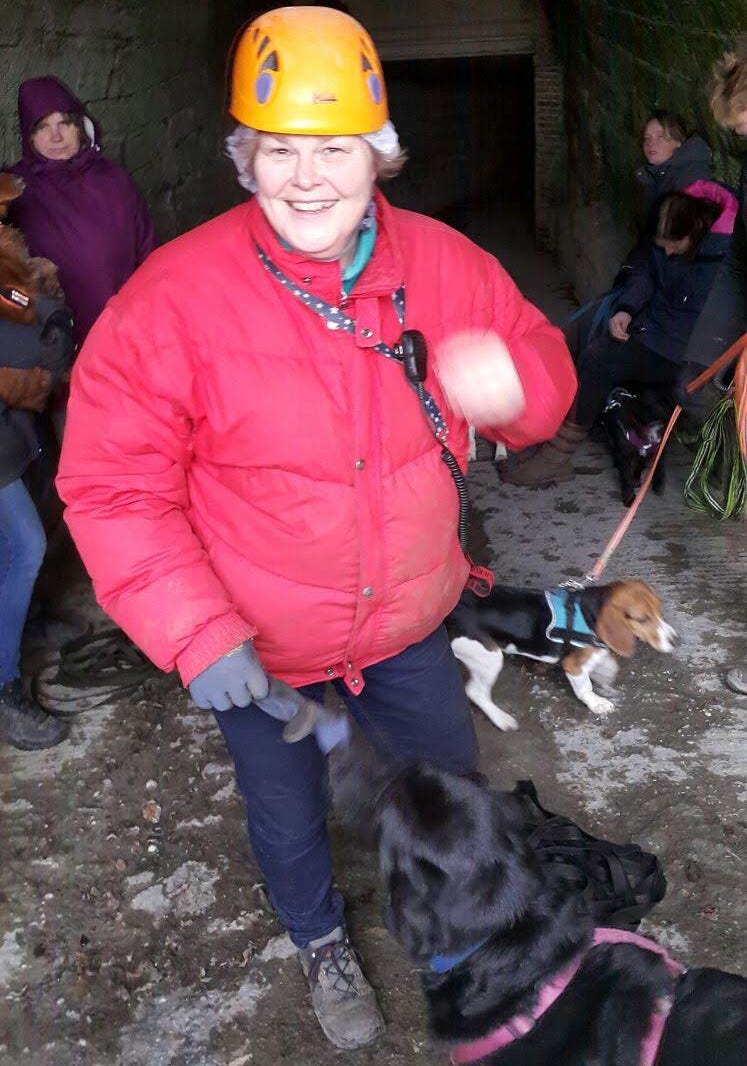
What? Caving to Nina? That’s crazy, right?
No way it’s crazy. And, though I’m sure I could redirect the classical conditioning I unconsciously trained into her, I don’t want to.
I’m using it to my advantage.
Because it’s how Nina, unwittingly, keeps me showing up for work.
And when you show up... what’s the point in not actually doing some work?
To decide comes from the Latin decidere. Which literally means “to cut off”.