

The devious trick used to marginalize strong, independent, high-achieving women
It's still being used and, unfortunately, remains in good working order

A friend sent me a message about Penthesilea — an Amazon warrior queen. She’d come across the name in “Villette” by Charlotte Bronte and decided to look into her. Buried in a Wikipedia entry she found this snippet:
*”A Netherlandish list of 101 strong women published between 1465 and 1480... circulated at the court of Mary of Burgundy and was read by members of the Brussels administration.”*
Say what? A list of strong women. In the Middle Ages?!
What would the medieval courts need a list of strong women for?
The more I looked, the clearer the answer became. And the more uncomfortable.
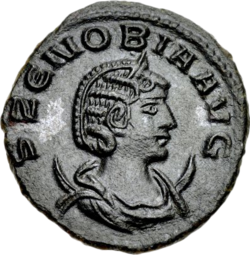
Patriarchal men can’t stomach independent, autonomous women
They’ll go to extraordinary lengths to lessen the uncertainty it raises within them.
They can’t change the facts. A woman who wins a war, builds an empire, commands armies — that happened. Trying to erase the facts is an exercise in futility.
So they go for what they *can* change: the narrative. Not what she did. What it *means*. What it says about *her*.
Victory becomes vengeance. Command becomes cruelty. Achievement becomes evidence of deviance. The story gets adjusted until the uncomfortable reality becomes manageable.
Men’s patriarchal conditioning makes them incapable of dealing with reality when that reality is a woman who exceeded every boundary they impose on women.
What’s left is to go for the jugular: attack the woman’s character and why you, as a woman want to avoid being labeled similarly.
It’s not a new trick. It’s an ancient one. And I can’t fault their psychological horse sense.
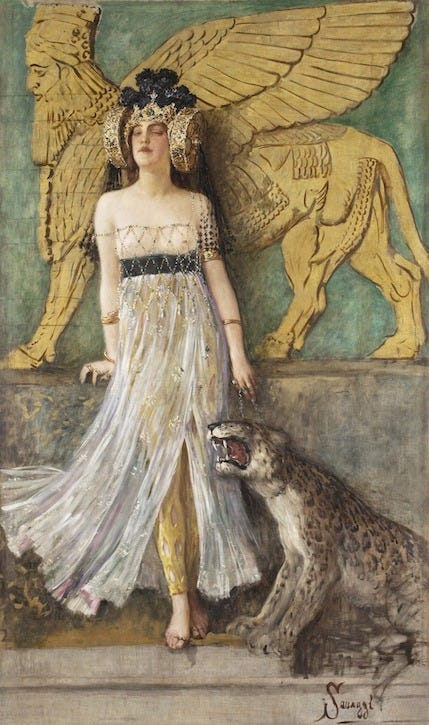
Lists of strong women? In the Middle Ages?!
**In 1361, a man named Boccaccio published the first major Western collection of famous women.**
*De Mulieribus Claris*. Translated: On Famous Women.
It’s been called proto-feminist. A celebration. Evidence that even in the 14th century, women’s achievements were recognized and recorded.
Right?
Read the fine print.
The women Boccaccio praised most warmly were the obedient ones. The chaste ones. The ones who sacrificed themselves heroically for husbands, fathers, or kingdoms. The ones who subordinated themselves with sufficient grace that a man found them worth preserving.
The “troublesome” women — the ones who ruled, conquered, refused, exceeded — appeared too.
But as warnings. By design.
What Boccaccio built wasn’t a celebration of women. It was a classification system. Here are the ones you’re allowed to admire. Here are the ones you should fear. Here, helpfully, is the difference — so you know which kind to be.
The list went on to influence every similar compilation for the next century: the 1405 Netherlandish chronicle, the 101 strong women circulated at Mary of Burgundy’s court, Philippe Bouton’s *Miroir des dames* in 1480. All using the same pattern: praise women, sort them, contain them — especially the high-achievers.
Medieval courts ate them up. Women included.
Which makes sense. We all — women *and* men — like not having to think too hard about fundamental questions. A moral framework disguised as a reading list is highly appetizing. And a very efficient way to keep women in line. You don’t have to tell women 1:1 what you need them to be. You just hand them a book. Scales much better.
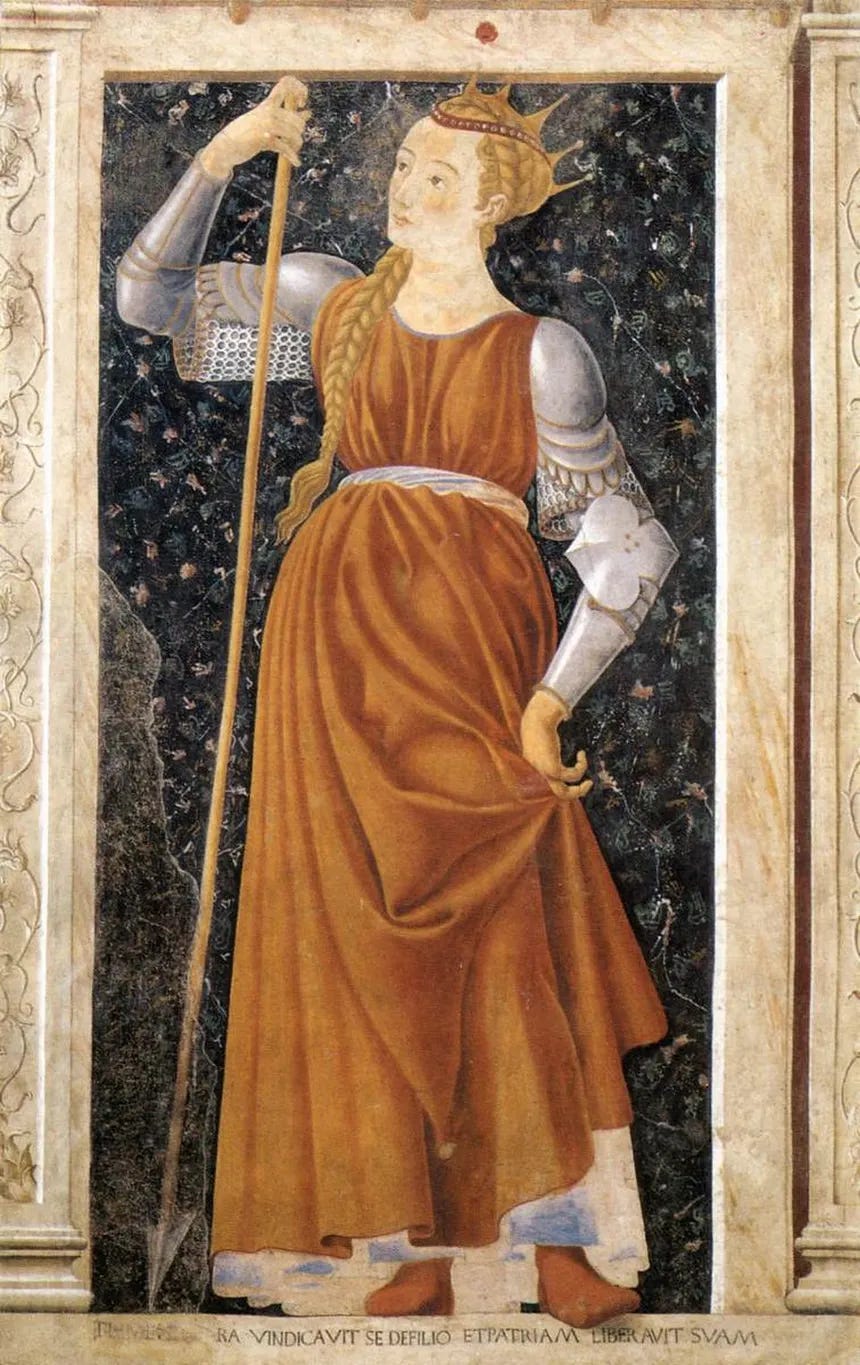
Three women. Three tactics. Same strategy.
Tomyris, defeated and killed Cyrus the Great. The most powerful conqueror of his era. Not by luck, not trivially. Total, decisive military victory over the then most feared ruler in the world.
So, obviously, something had to be done. Call her savage, bloodthirsty. Not strategic. Not brilliant. Not the woman who did what no army had managed to do before.
Semiramis ruled Assyria, built Babylon, ran military campaigns across the known world. Her story so incredible (to men) that historian decided it must be a myth. She wasn’t. So something had to be done to defang it.
Gradually, across centuries, the accounts filled up with sexual excess. Cross-dressing. Madness. Embellishments to avoid having to explain how a woman could possibly have done all that.
Penthesilea, Amazon queen, commanded armies. She stood for sovereignty and courage. In the hands of moralising male tradition she was made to look suspect, tragic, or doomed — as though a woman’s power itself were the problem needing explanation.
The tactics differ, the strategy is always the same: If you can’t erase the record, attack the character and sow doubt.
It’s called an ad-hominem attack. Usually employed by those who can’t argue their way around what causes them cognitive dissonance.
And the message in it is never subtle: admire her. Do not become her.
Its effectiveness is troubling.
A woman who refuses obedience gets renamed “excessive,” “dangerous,” or “tragic,” so the next woman thinks twice before claiming the same ground. And the one after her. And the one after her. It goes on until, eventually women themselves take on cautioning, nay policing, other women.
That’s how efficient the system gets.
This devious trick still works
In 2003, Britney Spears was the biggest pop star on the planet. By 2008, the narrative had changed her into a pitiable heap of failure that couldn’t even legally represent herself. The media had a field day with the legal conservatorship that stripped her of control over her finances, her body, and her career for thirteen years. Never once acknowledging that the relentless media pressure was a factor in her breakdown.
Thirteen years. Thirteen bloody long years.
The “crazy Britney” narrative was more than gossip. It was the instrument of control.
It wasn’t until the 2021 documentary *Framing Britney Spears* that she was vindicated and her story re-reframed. Not mental illness, but media-induced trauma and systematic financial exploitation. The initial story was the mechanism.
In 2021, Simone Biles — the greatest gymnast in history, full stop — withdrew from the Tokyo Olympics team final citing the “twisties,” a dissociative phenomenon where the brain and body stop communicating.
Her own words: *”I’m more than my accomplishments and gymnastics which I never truly believed before.”*
She was immediately called a quitter. A coward. The GOAT became a cautionary tale about weakness within hours. Hours! The reframe was instant and vicious — and perfectly timed for the moment she exercised autonomous judgment about her own body.

Top-women lists aren’t pure celebration
The “Top Women in Leadership” lists multiply on LinkedIn every year.
They look celebratory. Until you look closer.
They’re highly sophisticated psychological instruments — even if the patriarchal men producing them aren’t aware of it.
They tell you who you can admire. And simultaneously caution against becoming like the more “dangerous” ones. Notice who consistently makes these lists. Warm leaders. Collaborative leaders. Those who made the room feel safe. Who succeeded by being — and this will sound familiar — not too difficult.
The women who are sharp-elbowed, who take up space without apology, who refuse to soften their opinions? They appear with qualifiers. “Polarizing.” “Divisive.” “An acquired taste.”
Tomyris was an acquired taste too. They called her savage.
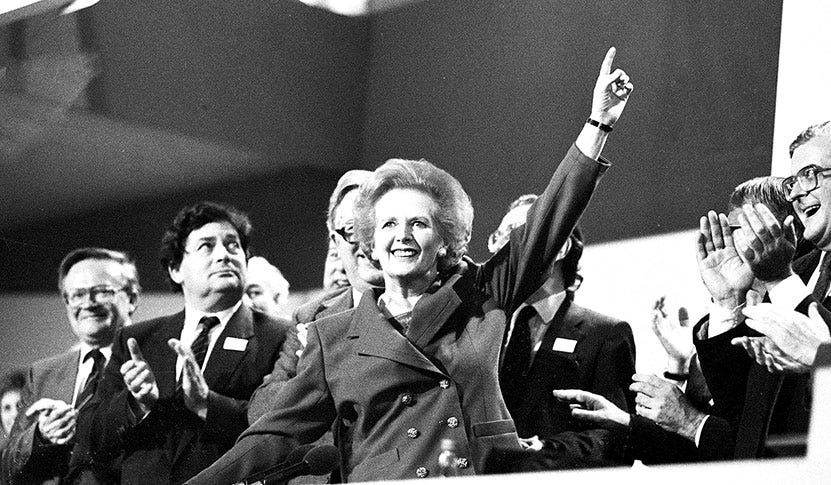
Labels suck but they don’t have to stick
In January 1976, the Soviet military newspaper *Red Star* published a piece calling Margaret Thatcher “the Iron Lady”. Obviously not a compliment. No, 100% intended as an insult.
Too hawkish. Too hard. Too unwomanly in her refusal to soften.
Margaret Thatcher’s counter-move is as brilliant as it was sharp and effective. Not a week after that piece hit the news, she stood in front of an audience and proclaimed:
I stand before you tonight in my Red Star chiffon evening gown...
the Iron Lady of the Western world.
She took their insult and turned it against them, wearing it as armor. Before they could weaponize it, she’d already made it a badge of honor.
Pull a Margaret Thatcher before the label hits
“Difficult” has been doing the same job for centuries that “savage” and “bloodthirsty” and “dangerous” did in the medieval lists. It’s the word patriarchal men reach for when a woman won’t shrink, soften, or self-cancel to make them comfortable.
I claim it. And pull my nose at anyone who seeks to contain me with it.
Margaret Thatcher’ idea isn’t to be scoffed at!

What’s one label you fear getting stuck on you — difficult, too much, divisive, intense, a lot — that you could claim as a badge of honor instead? And stick your tongue out at whoever tried to use it against you.